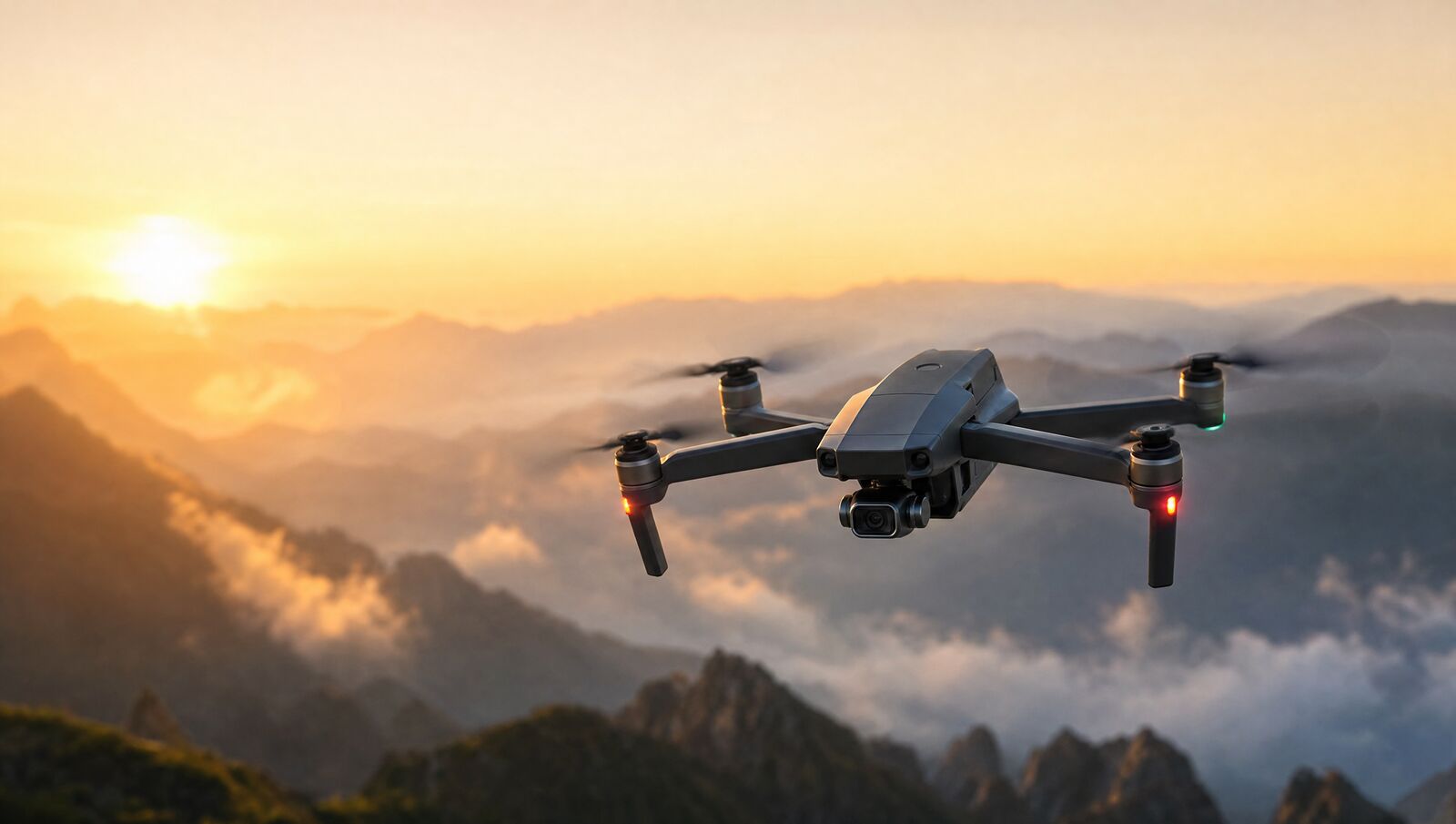
Best Beginner Drone Under $300: What I'd Actually Tell a Friend
The best beginner drone under $300 is the one you'll actually fly often: a compact camera drone with GPS hold, decent battery life, and parts you can replace cheaply when you crash — because you will crash. In that price band you're choosing between three paths: a foldable GPS camera drone for steady footage, a lightweight no-registration toy drone for practice, or a ready-to-fly FPV kit for speed. Buy from a brand with an active parts supply, learn on open ground, and fly within Philippine Civil Aviation Authority (CAAP) rules for small unmanned aircraft. If you want a second opinion before you spend, call or message me at +63 917 000 0000 — I answer questions about gear choices all the time, no strings attached.
A "beginner drone" is a small, affordable aircraft built to be easy to launch, hover, and land, usually with GPS or altitude hold so the drone stays steady while you learn the controls.
Key Takeaways
- Under $300 you're buying forgiveness and replaceability, not cinema quality.
- GPS position hold is the single most useful beginner feature — it stops drift while you think.
- Spare batteries and propellers matter more than a slightly better camera.
- Check CAAP registration rules before your first flight; small drones still have obligations.
- Most of what I've learned on my own channel came from cheap drones flown often, not expensive ones flown rarely.

I've flown drones across the Philippines for years — coastlines in Zambales, rice terraces up north, city rooftops on quiet Sundays — and almost every message I get from new viewers asks the same thing: which drone should I buy first, and can it stay under $300? So here's the honest version, the one I'd say out loud rather than type in a comment.
The short answer is that the price band matters less than the shape of the purchase. A $300 budget spent on a well-supported brand with cheap spare parts beats a $250 spent on a flashier spec sheet from a company that stops shipping batteries after a year. I've seen it happen to friends more than once. The drone works fine, then the first crash costs more than the drone.
What makes a drone good for beginners?
A good beginner drone forgives mistakes. That's the whole test. Specifically, you want three things: GPS position hold so the aircraft sits still when you let go of the sticks, a return-to-home function that brings it back when you panic, and propellers that cost a few dollars each rather than a proprietary nightmare.
Everything else — camera resolution, flight time, top speed — is secondary at this stage. Your first twenty hours of flying are about muscle memory. Which stick does what. How wind feels on a small airframe. What happens when you fly toward the sun and lose sight of it. None of that changes with a better sensor.
And one more thing people skip: weight. In the Philippines, CAAP rules treat drones differently by weight class, and staying in the lighter category keeps your paperwork simple. Check the current rules on the CAAP website before you buy, because thresholds and registration requirements get updated and I won't guess at figures I can't verify.
Should you buy a camera drone, an FPV drone, or a simple practice drone?
This is the real decision under $300, and the comparison table below breaks it down. If your goal is travel footage — beach trips, family events, the occasional sunset clip for social media — a foldable GPS camera drone is the right shape. If you've watched FPV freestyle videos and your heart is set on flying fast through gaps, a ready-to-fly FPV kit fits the budget, though the learning curve is steeper and crashes are part of the deal.
If you're honestly not sure whether you'll stick with the hobby, start with a lightweight practice drone. It's the cheapest tuition you can pay. You'll know within a month whether you love flying, and you'll have lost nothing when you upgrade.
| Option | Best for | What to expect | Biggest trade-off |
|---|---|---|---|
| Foldable GPS camera drone | Travel and social video | Steady hover, follow-me modes, footage good enough for phone-sized screens | Camera is the weakest link; don't expect pro output |
| Lightweight practice drone | Learning sticks and orientation | Cheap, tough, flies indoors and out, near-zero heartbreak on crashes | Basic or no camera; you'll outgrow it |
| Ready-to-fly FPV kit | Speed and freestyle flying | Immersive goggles view, agile handling, repairable frames | Steep learning curve; expect to break parts while learning |
Takeaway: pick by what you want to do, not by spec sheet — steady video, cheap practice, or speed.
When friends ask which single option to pick with no other context, I tell them the foldable GPS camera drone. It covers the widest range of beginner goals and it's the category where brands under $300 compete hardest, which means the quality floor keeps rising. If you're weighing a specific model against another, send me a message through my about page and I'll give you my honest take — I answer most gear questions within a day or two.
How much should you actually spend on your first drone?
Spend the full $300 if the hobby is serious for you; spend less if you're testing the waters. The mistake isn't spending too little — it's spending the budget on the wrong things. A mid-tier drone with two spare batteries beats a top-tier drone with one, because flight time in the real world is the sum of every battery you carry, not the number printed on the box.
Here's how I'd split a $300 budget: most of it on the drone itself, a slice on spare propellers, and the rest on at least one extra battery. Leave a small buffer for the first crash. There's always a first crash. Mine was into a mango tree in Batangas, and the propeller bill taught me more than any tutorial.
That chart shows how my own video library breaks down by subject — travel coastlines, city scenes, and gear-focused vlogs each make up a different share of what I've published on the channel. The reason it matters to you is simple: the gear-focused videos are the ones where I test exactly the kinds of drones you're shopping for, usually in the same conditions you'd fly in. Watching someone crash and recover on camera is worth ten product pages.
Where can you legally fly a drone in the Philippines as a beginner?
Fly in open, uncontrolled spaces away from airports, crowds, and government installations, and check the CAAP rules for your drone's weight class before you take off. For small recreational drones the obligations are lighter than for commercial operations, but they exist — registration thresholds, no-fly zones near airports, and altitude limits all apply.
Practically, that means beaches at dawn, provincial fields, and wide provincial roads are your friends. Metro Manila is trickier: more restricted airspace, more people, more things to hit. My early flying happened mostly in open provincial areas precisely because the rules and the risk were easier to manage. When in doubt, ask the CAAP or a local flying club before you launch — a five-minute question beats a problem at 200 feet.
I've covered this in more depth in my guide to drone rules in the Philippines, which I update when the regulations change.
How do you learn to fly without destroying your first drone?
Start low, start slow, and start over grass. Grass forgives; concrete doesn't. Your first sessions should be ten minutes of hovering in place, then gentle figure eights at knee height, then slow circuits. Resist the urge to send it up on day one — altitude feels safe but distance is what actually loses drones.
Three habits will save you more money than any feature: set your return-to-home altitude before every flight, keep the drone within line of sight even when the app says it's fine, and land with battery to spare rather than battery empty. Wind is the silent killer for light drones. What feels like a breeze on your face at ground level can be a serious push at height, and small airframes fight it hard on the way back.
If you want to see what the learning curve actually looks like, my video library has plenty of early flights where I got things wrong on camera. Those are more useful than the polished ones.
And if you'd rather have someone walk you through a specific purchase before you commit, you can reach me directly and I'll help you think it through — that kind of question is exactly what the channel is for.
What features can you skip at this price point?
Skip obstacle avoidance, follow-me marketing hype, and 4K-bragging sensors under $300 — at this budget, those features are usually compromises wearing a label. Real obstacle avoidance at reliable quality simply doesn't appear at this price, and a marketing checkbox version can make beginner pilots more careless, not less.
What you should not skip: GPS hold, return-to-home, spare parts availability, and a brand with an active user community. A drone with an online forum full of people who've fixed your future problem is worth more than a spec sheet win. Before buying any model, search for its spare battery and propeller listings and confirm they're actually in stock and shipping to the Philippines. Two minutes of checking has saved friends of mine from paperweights.
When should you upgrade from your first drone?
Upgrade when your skills bump against the drone's limits, not before. The telltale signs: you're hovering steadily every session, you've stopped clipping branches, and you're noticing what the camera can't do rather than what you can't fly yet. That's usually after a few months of regular flying, and it varies from person to person.
When that day comes, your first drone doesn't retire — it becomes the backup, the loaner for curious friends, or the drone you fly in tight, risky spots where you'd rather not send the good one. Mine still flies. It has stickers now, and one slightly bent leg from a landing I'd rather not describe in detail.
Ed Ricker — Content Creator, drone vlogger covering the Philippines (Luzon, Visayas, and Mindanao locations), flying and filming full-time. Popular filming spots I return to often: Zambales coastlines, Batangas beaches, Baguio highlands, Siargao shores, and Cebu surroundings.
Frequently Asked Questions
Do I need to register a drone under $300 in the Philippines?
It depends on the drone's weight and how you fly it. CAAP sets registration thresholds by weight class, and lighter recreational drones generally face simpler requirements than heavier or commercial ones. Check the current CAAP unmanned aircraft rules before your first flight, because the thresholds and process are updated from time to time. Buying your drone's exact weight class details before purchase is a two-minute step that avoids problems later.
Can a drone under $300 shoot good video?
Good for what? For social media, family memories, and phone-sized screens — yes, genuinely. For professional client work or large screens, you'll notice the limits in dynamic range and low light. The honest framing: a $300 camera drone produces footage that looks great on Instagram and YouTube at normal playback, and looks visibly limited the moment a client expects commercial-grade output. Match the tool to the job.
How long does a beginner drone battery last?
Most drones in this price class fly somewhere in the range of roughly fifteen to thirty minutes per battery, and the real-world figure is usually shorter than the marketing number because wind, filming, and aggressive flying all drain faster. That's why my standard advice is to budget for at least one spare battery from day one. Two batteries turn a ten-minute outing into a proper practice session.
What's the first accessory I should buy with the drone?
Spare propellers. Always spare propellers. They're the cheapest part on the aircraft and the first thing to break, and a drone with a snapped prop is a paperweight until the replacement arrives. After that, an extra battery, then a carrying case. SD cards matter too if your drone records — get one rated for video rather than the cheapest option on the shelf, because write speed affects recording reliability.
Is it better to buy online or from a local store in the Philippines?
Buy from a source that can actually supply spare parts and honor warranty claims, whether that's online or local. Online marketplaces often have wider selection and better prices; local shops give you somewhere to walk into when something breaks. My rule: buy the drone wherever it's cheapest, but confirm first that batteries and propellers for that exact model ship to the Philippines. Parts availability is the real purchase, not the box.
Ready to see what these drones actually do in real Philippine conditions? Watch a few flights on my channel's video library, read my beginner drone tips guide before your first flight, and check the about page to learn how the channel runs. If a specific model decision is holding you up, call +63 917 000 0000 or send the contact form below and I'll give you a straight answer.